
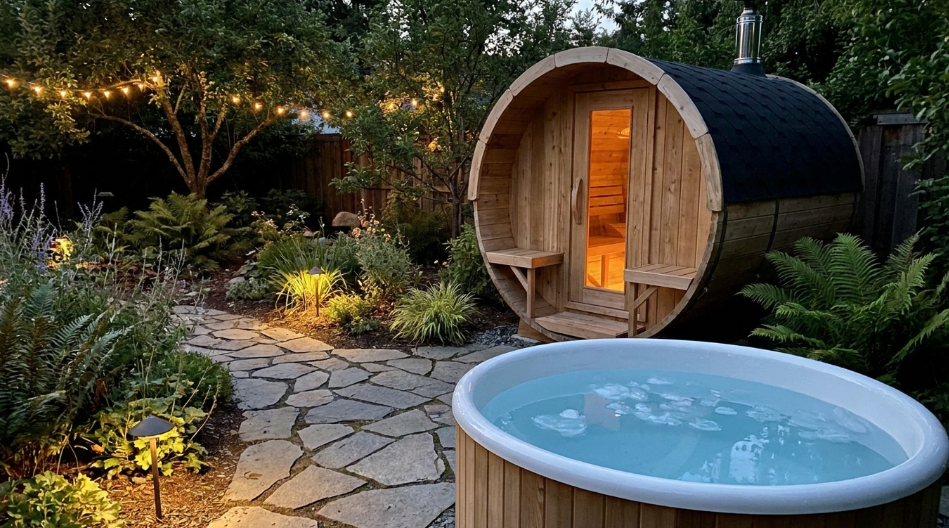
A properly insulated sauna with a correctly sized heater runs fine in subzero temperatures, and plenty of people in cold-climate regions consider winter the best season to use one. The main adjustments are a heater rated for a larger volume than the manual suggests for mild climates, double-wall insulated construction instead of single-wall, and a plan for getting from the house to the cabin door that doesn’t turn into a slog through knee-deep snow every session.
Why Does Winter Change What Sauna You Should Buy?
Heater sizing charts are usually built around a baseline outdoor temperature, often assuming a moderate climate. In a region that regularly drops below freezing, or well below zero for weeks at a stretch, a heater sized for that baseline will struggle to hold temperature, run longer than expected, and use more electricity per session than the specs imply. The fix isn’t complicated: size up. If a manufacturer’s chart puts your cabin at a 6 kW heater for a “standard” climate, a cold-climate install often does better with 7 to 8 kW for the same footprint, giving the heater headroom to recover heat lost through the walls and door seal.
Does Insulation Actually Matter That Much?
Yes, more than people expect. A single-wall cedar cabin looks the part but loses heat fast once outdoor temperatures drop well below freezing, which means longer warm-up times and a heater running near its limit all session. Double-wall construction with insulation sandwiched between an interior and exterior wood layer holds heat dramatically better, and it’s the difference between a 20-minute warm-up and a 45-minute one in a hard winter. If you’re buying specifically for a cold climate, ask directly whether a model is single or double wall construction rather than assuming; a lot of budget cabins cut this corner because it doesn’t show up in a photo.
How Much More Does Winter Sauna Use Cost to Run?
Expect a moderate bump in electricity cost per session, not a dramatic one, assuming the cabin is properly insulated and the heater is sized correctly. A well-built double-wall cabin with an appropriately sized heater might see per-session electricity costs rise by a modest amount in deep cold compared to a 40-degree evening, since the heater is working harder against a bigger temperature gap but isn’t fighting a losing battle the way an undersized, single-wall setup would. The bigger cost driver is usually the upfront choice of cabin construction and heater size, not the ongoing electricity, which is one more reason not to undersize either one to save money at purchase time.
What Changes About the Experience Itself?
The temperature swing between a 180-degree cabin and 10-degree air outside is, for a lot of long-time users, the entire point. Stepping out into snow or rolling in it after a session is a long-standing practice in Nordic sauna culture, and the contrast is part of why cold-climate sauna owners often use their units more in winter than summer rather than less. Practically, that means thinking through the path from the sauna door to wherever you’re cooling off: a cleared, non-slip walkway matters more in January than it does in July, and a lot of injuries around home saunas in winter come from a slick patio, not the heat itself.
What Should You Look for When Buying for a Cold Climate?
Prioritize double-wall insulated construction, a heater sized one step above the “standard climate” recommendation for your footprint, and a door with a proper seal, since gaps around the door are where a surprising amount of heat escapes in cold weather. Budget for a cleared, ice-safe path to the cabin as part of the install, not as an afterthought. If you’re comparing units built with cold-weather use in mind against ones that aren’t, checking manufacturer specs directly, for example at https://sweatdecks.com, for wall construction and recommended heater wattage by climate zone is a faster way to sort options than relying on generic marketing photos of a cabin in the snow, which every brand has regardless of how the thing is actually built.
What About Snow Load and Roof Design?
A flat or low-slope roof that’s fine in a region with light snowfall can become a real problem in a place that gets several feet of accumulation over a winter. Snow sitting on a cabin roof adds weight the structure needs to be built for, and meltwater that refreezes at the roofline can work its way under shingles or roofing panels over a few seasons if the pitch is too shallow to shed water and snow on its own. A steeper pitched roof, or a metal roof that sheds snow rather than holding it, is worth the marginal extra cost in a heavy-snow region. It’s a detail that rarely shows up in a product photo but matters a great deal five winters in.
Condensation is the other issue that shows up specifically in cold climates. The temperature difference between a 180-degree interior and a below-freezing exterior wall can produce moisture buildup inside the wall cavity if the cabin isn’t built with a proper vapor barrier. Over several winters, unmanaged condensation leads to wood rot inside walls that look fine from either side until the damage is well established. This is another reason double-wall, climate-rated construction earns its higher price tag in a genuinely cold region, rather than being a marketing upsell.
Frequently Asked Questions
Can you use an outdoor sauna in freezing temperatures?
Yes, and many owners in cold climates consider winter the best season for it. The heater just needs to be sized generously enough to overcome heat loss through the walls and door.
Does cold weather increase sauna heating costs a lot?
It raises costs somewhat, since the heater works harder against a colder outside temperature, but a well-insulated cabin usually adds only a modest amount per session.
How do you keep sauna water from freezing outdoors?
Most home saunas use a bucket and ladle brought out and back in with you, avoiding the freezing problem entirely. A plumbed line needs insulation or draining for winter.
Is walking from a hot sauna into snow safe?
For most healthy adults, brief cold exposure after a sauna session is standard in Nordic sauna culture and isn’t dangerous on its own. People with cardiovascular conditions should be more cautious with sudden temperature swings.
References
- “Effects of heat and cold on health, with special reference to Finnish sauna bathing.” American Journal of Physiology, 2018. https://pubmed.ncbi.nlm.nih.gov/29351426/
- “Cardiovascular and Other Health Benefits of Sauna Bathing: A Review of the Evidence.” Mayo Clinic Proceedings, 2018. https://pubmed.ncbi.nlm.nih.gov/30077204/
- “Benefits and risks of sauna bathing.” The American Journal of Medicine, 2001. https://pubmed.ncbi.nlm.nih.gov/11165553/
- National Fire Protection Association. https://www.nfpa.org/
